
With nearly two handfuls of candidates interviewed by Houston Astros’ owner Jim Crane and his front office baseball ops managers, it came down to two general choices: Pick a youthful, player’s manager type, well versed in data-driven player development, or select an older, less saber-savvy skipper, making a clear break (from a PR standpoint, anyway) from the previous scandal-stained administration.
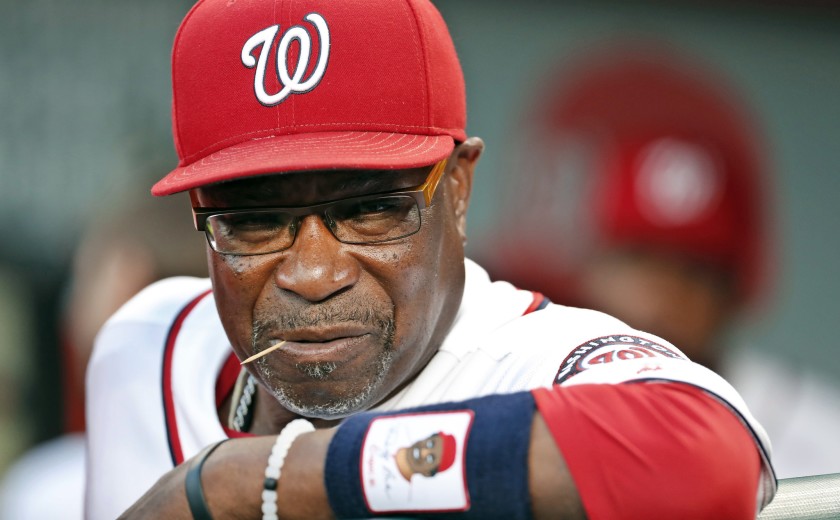
They chose the latter. In bringing the 70-year-old Dusty Baker on board on a one-year deal (with a club option for 2021) finalized on January 29, the Astros add a steady, experienced (and player-friendly, to be sure) hand to a squad likely to be knocked off-center at many points during the coming season, both from the press and from fans, friendly and otherwise.
With Baker’s first-hand knowledge of a variety of personal and team-related scuffs and scandals, he will be a stern and commanding chief to keep his charges focused. His genial manner, though, will also be a welcome salve to any open psychological wounds that may pop up during the season; and, there will be some.
Related: Dusty’s Son, Cal Infielder Darren Baker, May Be In Astros’ Draft Day Plans
The Pittsburgh Drug Trials
In 1985, Baker’s penultimate season as a player, an MLB-related scandal was borne out of the so-called Pittsburgh drug trials, implicating several Pittsburgh Pirates, past and then-current, in the cocaine trafficking trial of Philadelphia caterer Curtis Strong, convicted of selling the drug.
Among those called before a Pittsburgh grand jury were former Astros Enos Cabell (1975-1980, currently an assistant to the GM in Houston’s front office), the late pitcher Joaquín Andújar (1976-1981, 1988), and Jeffrey Leonard (1978-1981). Their testimony, as well as the other players’, led to the drug trials and their resultant national headlines.
Ultimately, 11 players were suspended by MLB and commissioner Peter Ueberroth. All the suspensions were commuted, however, in exchange for fines, periodic drug testing, and community service.
The Pittsburgh drug trials are considered one of baseball’s biggest all-time scandals, although one that was “behind the scenes” not affecting play on the field, a distinction sadly lacking in the Astros’ recent sign-stealing scheme.
Seven players were ultimately determined to have been drug users over time… players who had also facilitated distribution to other players. These, including Andujar, Cabell, and Leonard were suspended for a full season.
These players were allowed to continue playing, though, with the proviso that they donate 10% of their base salaries to drug-abuse programs, submit to random drug testing, and contribute 100 hours of drug-related community service.
Dusty Baker was one of 10 other players named but not suspended or otherwise punished. They were, however, subject to random drug testing for the duration of their careers. Baker’s playing career came to an end a year later, in 1986, after two years as an outfielder with the Oakland A’s.
Personal Setbacks
Baker was forced, in 2002, to endure the public humiliation of the IRS coming after him for 12 years for $4 million in back taxes, interest, and penalties.
A series of his tax shelters were disallowed and the government began garnishing his managerial paychecks toward the end of the tenure of his employment by the San Francisco Giants (1993-2002).
“His financial troubles date[d] back to tax-shelter investments he made at his brother’s behest in the early 1980s when he played for the Los Angeles Dodgers,” according to SF Gate from November 9, 2002.
He’s also survived prostate cancer, a stroke, and an irregular heartbeat.
Media Circus Experience….
Finally, as detailed in a recent USA Today report, “[Baker] insulated Barry Bonds from the media circus in 2001 when he set the single-season home run record with 73 amid the BALCO fallout, and kept the feud between his two best players, [former Astro] Jeff Kent [2003-2004] and Bonds, from dividing the clubhouse.”
…Yields A Capable Ringleader
Many have tried, and ultimately failed, to compare the team-related, tech-aided sign-stealing of the Astros with the single-player cheating revealed in that turn-of-the-century steroid/PED scandal.
The differences are many, but Baker, nevertheless, can take his Bonds/Giants experience and apply the player relationship tactics and media juggling ploys in Houston that got him through those trying years in the Bay Area.
Being the in-house peacemaker between Bonds and Kent should serve Baker well for tending and manicuring the delicate treasure that the Astros’ well-documented clubhouse culture has become (recent scandal, of course, notwithstanding).
With players said to be given team “permission” to apologize and open up about their recent scandal come Spring Training, a dam of player admissions may just burst forth.
“We’re going to sit in a room and talk about it and then we’re going to come out and address the press,” Crane told reporters a week after MLB released the punishments. “All of them will address the press either as a group or individually.”
What the players end up saying as a group will be discussed, decided, and vetted appropriately for public consumption, and shouldn’t be controversial, in-house.
But, what if a player or two… or eight, end up saying something individually to each other or the press that either gets expressed or misinterpreted in a way that implies blame toward another?
Well, there goes the delicate clubhouse culture, or, there begins a hitting slump for a beleaguered player, or, there begins a week-long losing streak for the team, or there even erupts a scuffle between players.
The Astros would then be, however unwittingly, adding to MLB’s punishment by crippling themselves -and their season- in a sad, unnecessary, and wholly preventable display of self-destruction.
Enter Dusty Baker.